
Supporting Transitions with Alzheimer’s: Moving to Memory Care or Skilled Nursing with Compassion
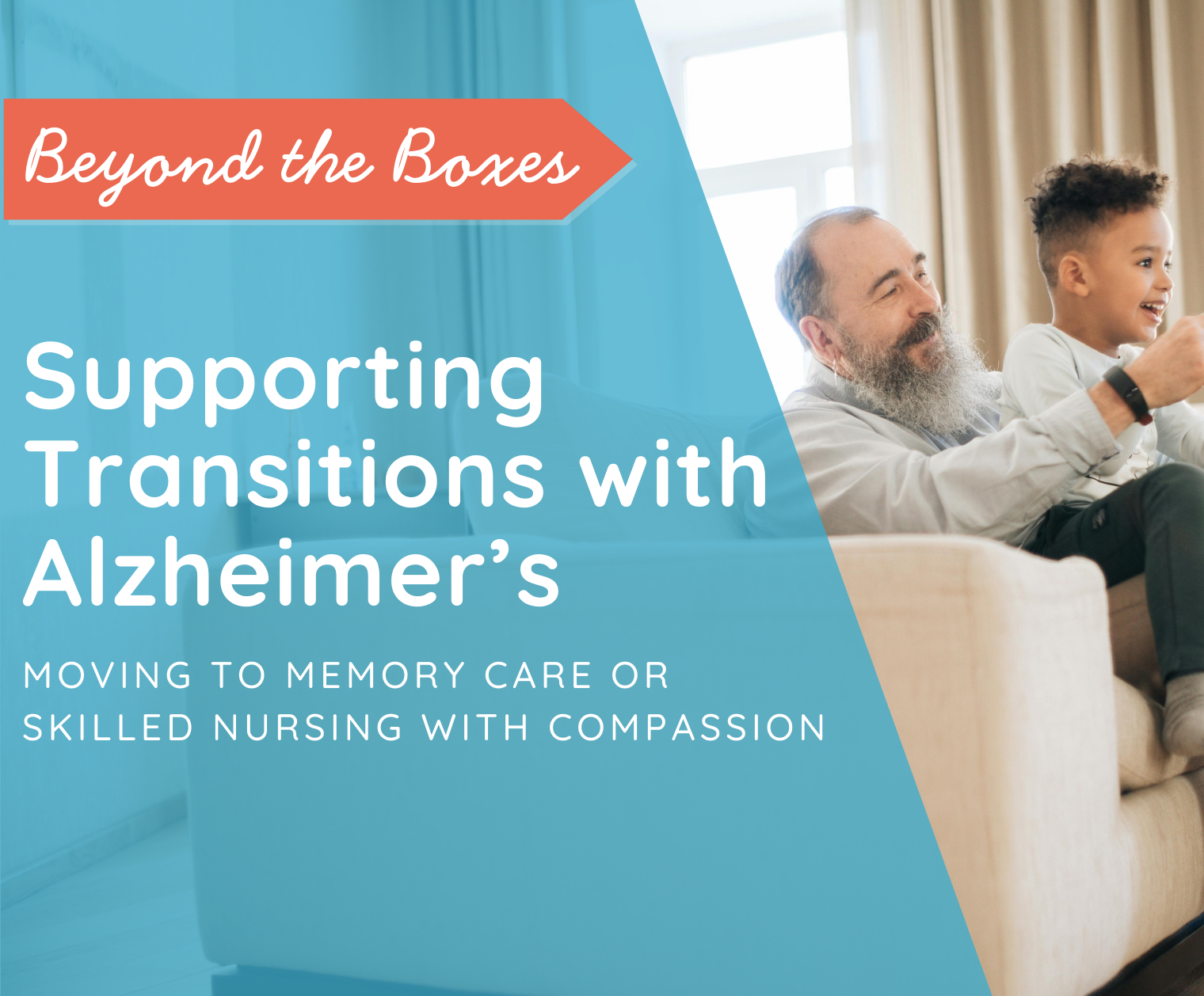
When a loved one is living with Alzheimer’s, every transition feels monumental.
The diagnosis reshapes daily life, relationships, and routines. But one of the most challenging milestones for families often comes when it’s time to relocate their loved one into memory care or skilled nursing.
It’s a decision made with love, but it’s also filled with grief, guilt, and hundreds of practical questions. Chief among them: How do we handle a lifetime of belongings while helping our loved one feel safe, supported, and at home?
Why This Transition Feels Different
Unlike a traditional move, relocating a parent or loved one to memory care isn’t just about changing addresses—it’s about moving into a completely new phase of life.
- Downsizing becomes more personal. Every item carries a memory, a routine, or an anchor to identity.
- Space is limited. Memory care and skilled nursing residences require thoughtful choices about what to bring, what to store, and what to let go.
- Emotions run high. Families are often balancing grief with logistical to-do lists, all while trying to support their loved one’s emotional needs.
This is where the process requires equal parts practicality and deep compassion.
How Honoring Aging Supports Families Through This Transition
At Honoring Aging, we’ve guided many families through the delicate process of moving into memory care or skilled nursing. Here’s how we help:
1. Identifying Comfort Items
We walk through belongings with families to identify the pieces that will bring the most comfort in a new space: a favorite chair, well-loved blankets, framed photos, or a cherished quilt. These items help the new environment feel familiar.
2. Curating with Care
Since space is limited, we help families choose a thoughtful collection of belongings—enough to feel personal and comforting without overwhelming.
3. Handling the Rest
From storage solutions to donation coordination, we manage what doesn’t make the move. Families can focus on their loved one while knowing belongings are handled respectfully.
4. Recreating Familiarity in a New Space
We take time to set up the new room to reflect the old—placing photos, furniture, and keepsakes in familiar arrangements. This reduces anxiety and helps smooth the adjustment.
5. Providing Emotional Space
We honor the process of sorting and letting go. This is sacred work, not just logistics, and we walk families through it with patience and understanding.
Helping Families, Not Just Homes
It’s easy to think of moving as “packing and unpacking.” But in reality, moving to memory care or skilled nursing is about supporting a family through change.
- For adult children, it’s easing guilt and overwhelm.
- For spouses, it’s shifting roles while honoring love and commitment.
- For the person moving, it’s holding dignity and comfort at the center.
You Don’t Have to Do This Alone
Handling belongings, coordinating logistics, and creating a soft landing in a new environment is a heavy load—especially when layered with the emotional weight of Alzheimer’s.
At Honoring Aging, we carry that load with you. We handle the physical tasks of packing, sorting, and setting up, while you focus on being a son, daughter, spouse, or friend.
Because this stage of life deserves more than efficiency—it deserves compassion, dignity, and care. ?
? Learn how we can support your family at www.honoringaging.com.
Alzheimer’s Support Resources
If your family is navigating an Alzheimer’s diagnosis or preparing for a move to memory care, here are trusted resources that may help:
- Alzheimer’s Association – www.alz.org
24/7 Helpline: 1-800-272-3900
Offers education, support groups, and a helpline for families and caregivers. - National Institute on Aging (NIA) – www.nia.nih.gov/health/alzheimers
Provides reliable information on Alzheimer’s research, caregiving strategies, and treatment updates. - Family Caregiver Alliance – www.caregiver.org
Support, resources, and practical tools for those caring for loved ones with dementia. - Local Memory Care Communities – Many communities offer tours, caregiver support groups, and respite programs. Ask your township senior services or visit your area’s Council on Aging.
- Honoring Aging – For hands-on help with moving, downsizing, or resettling during this stage of life. We bring compassionate support to the transition, so you don’t have to do it all alone.